Let’s follow a story inspired by rust and how I recently found a connection between Oklahoma and Kenya, embedded in rust.
As a Kenyan writer, I have a connection to Oklahoma, given I contribute to NonDoc Media, and thanks to my friends James Coburn, Tres Savage, and Kenyan Phillip Njoroge whose story I covered about how he overcame obstacles to travel from Nairobi to Oklahoma in pursuit of an education.
From stories James Coburn tells me about tornadoes in OK to stories of how Oklahomans helped Phillip Njoroge settle down in 2019 when he joined the University of Oklahoma, I have, since 2017, grown a keen interest in the state. An interest I feed through reading.
So, I had my head down recently, a cup of coffee in my hand, casually surfing the internet on my smartphone. I wanted to learn something new about Oklahoma.
As I read random articles, I came across information that the state is referred to as the ‘Red Dirt State’.
Interesting, I thought.
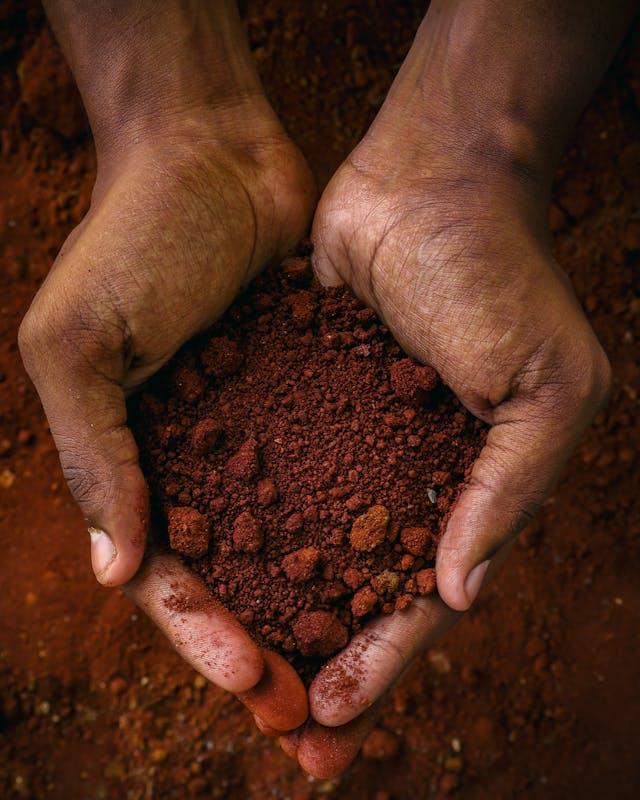
Why is Oklahoma the Red Dirt State? I dug deeper and discovered it’s because of Oklahoma’s expansive areas covered with red soil, the Port Silt loam, designated as “state soil” for it exists in 33 counties in Oklahoma.
I also learnt that the red in the soil comes from hematite, an iron oxide, or what we call…rust.
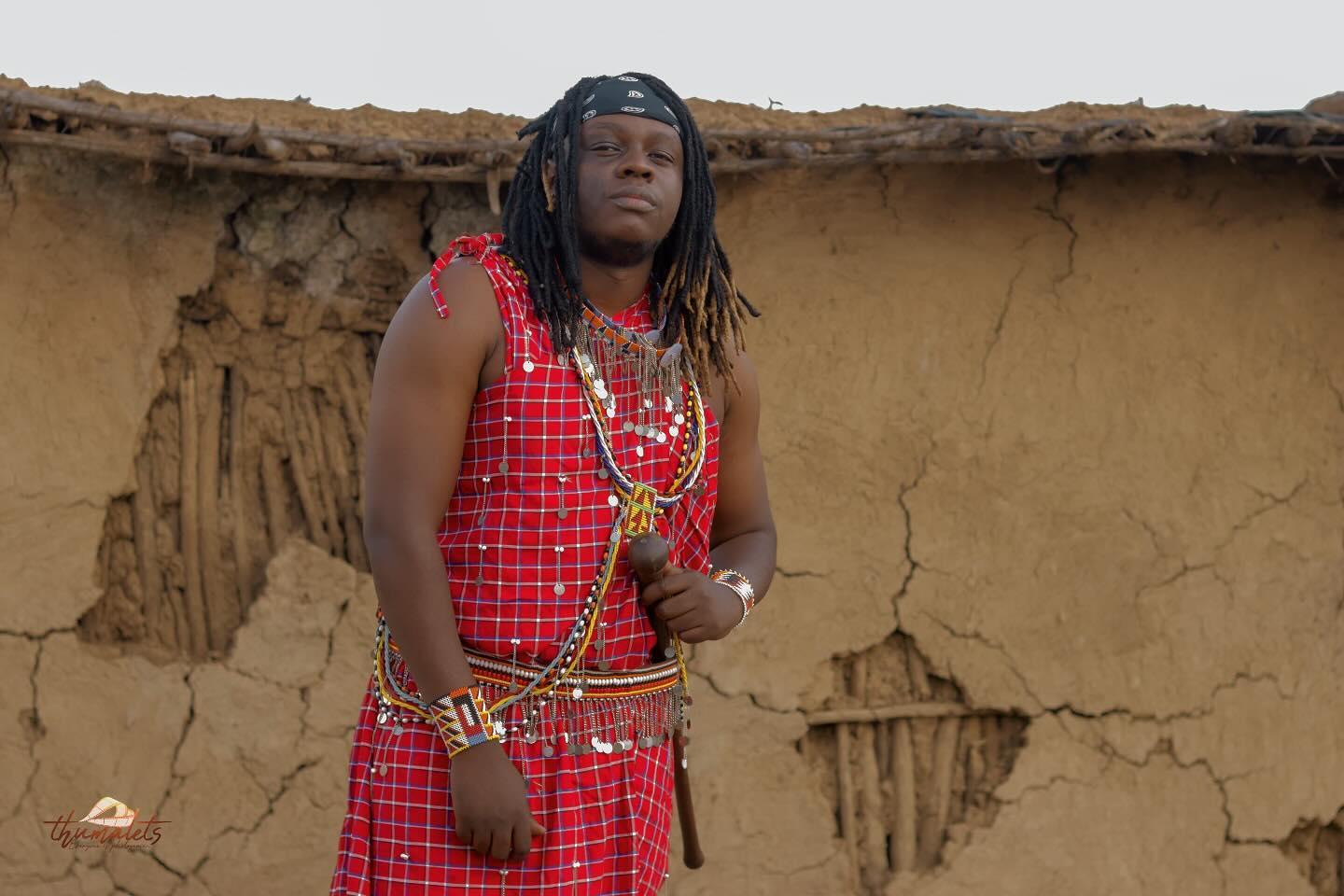
It was then that my mind wandered—it ziplined on a rusty line of thought—to my roots in Kenya, the Maasai tribe. Hematite was a word my friend, writer Maison Ole Nkurunnah who is also a Maasai, mentioned to me in one of our discussions about our culture, explaining how it was hematite that caused the red of the soil our people traditionally use.
In the Maasai community, red soil holds great significance as part of the culture. And so does it in Oklahoma. This piqued my interest.
In this article, I trace rust in the soils of Oklahoma and Kenya. While I explore the influence of red soil on cultures in Oklahoma and Kenya, take note that red soil exists elsewhere in the world and holds significant cultural meaning. Red soil is, for example, used in artwork and for symbolic rituals during ceremonies held by the Surma and Karo of Omo Valley in Ethiopia, the Himba of Namibia, Aboriginal Australians, the Māori of New Zealand, and the Beothuk (Red Indians), who are indigenous North Americans.
How does rust inspire this story?
Oklahoma and Kenya, while miles apart across an ocean and while very different in climate and culture, hold rhymes in their red soils spun by the poetic Mother Nature.
Here’s the scientific story behind the red soil.
When iron in rocks breaks down and reacts with oxygen and water (oxidation), iron minerals in the soil rust. Hematite, a dense iron oxide (rust) and the primary ore of iron, colors the soil red in this process that has gone on over thousands of years.
Oklahoma: The Red Dirt State
According to Oklahoma Ag in the Classroom, a program of the Oklahoma Department of Agriculture, Food and Forestry, Oklahoma State Department of Education, and the Oklahoma Cooperative Extension Service, the Port Silt loam (red soil) is the most common in the state.
It is “very productive” and is “used to grow a wide range of crops,” including cotton, wheat, sorghum, and oats.
A friend from Oklahoma told me how Oklahomans avoid white clothes growing up because it’s hard to get the red dirt stain out of fabrics. I wondered, was that the source of the saying “You can’t wash the red dirt out”, meaning that certain experiences leave a lifetime impact on the character of someone?
Oklahoma’s red soil has also influenced music. It inspired Red Dirt Music, a regional American genre blending elements of country, rock, folk, and blues.
Red Dirt Music is famous for its storytelling lyrics about daily life, work, heartache, small-town stories, and identity. An example is Robert Earl Keen’s The Red Goes on Forever which brings narrative plot to music. It’s about Sherry and Sonny, two young people in a small town who desire a better life. The plot follows their choices, like crime, and the consequences, a musical story that reminds us of the cost of escape and freedom.
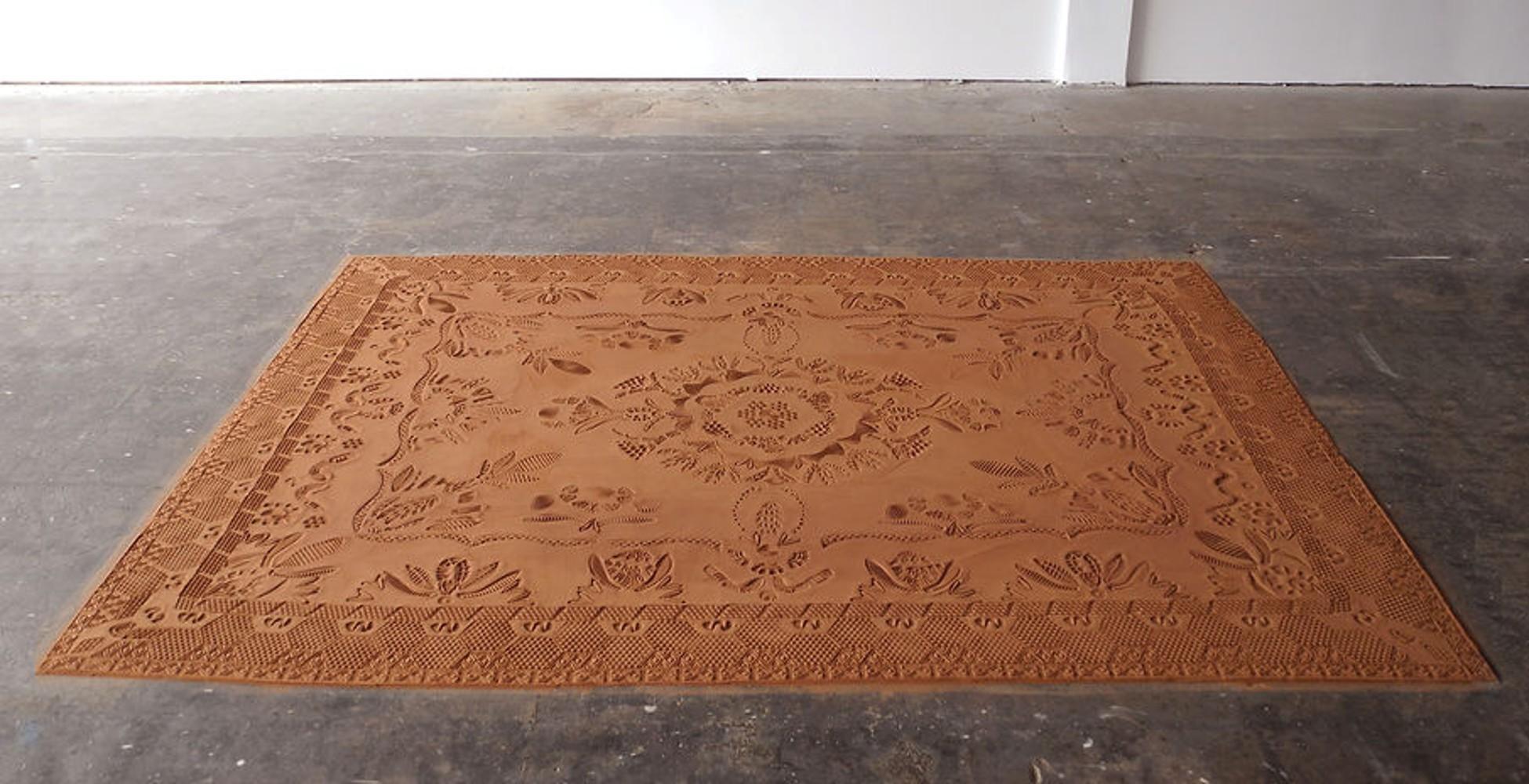
Away from music, red soil has influenced artists and their art in Oklahoma. Rena Detrixhe, an artist who participated in the inaugural year of the Tulsa Artist Fellowship and established her practice in Tulsa, creatively incorporated Oklahoma’s red dirt into her art. She collected “gallons of red dirt by hand,” according to an interview she gave to Artsy, and “transformed them into ornate tapestries”. Her works include different versions of the Red Dirt Rug, which she exhibited in museums and galleries across Oklahoma.
In the interview, Artsy quotes Detrixhe, “For me as an artist, the red dirt has come to represent Oklahoma in all its complexities and contradictions.”
“Red dirt symbolizes grit, perseverance, sorrow, pain, spirit, resilience,” she said.
There’s also the Red Earth Festival held in Oklahoma, which draws its name from Oklahoma’s prevalent red soil. The festival features experiences of the country’s premier native art markets, including original paintings, jewelry, sculpture, beadworks, and textiles.
The red ochre of the Maasai tribe
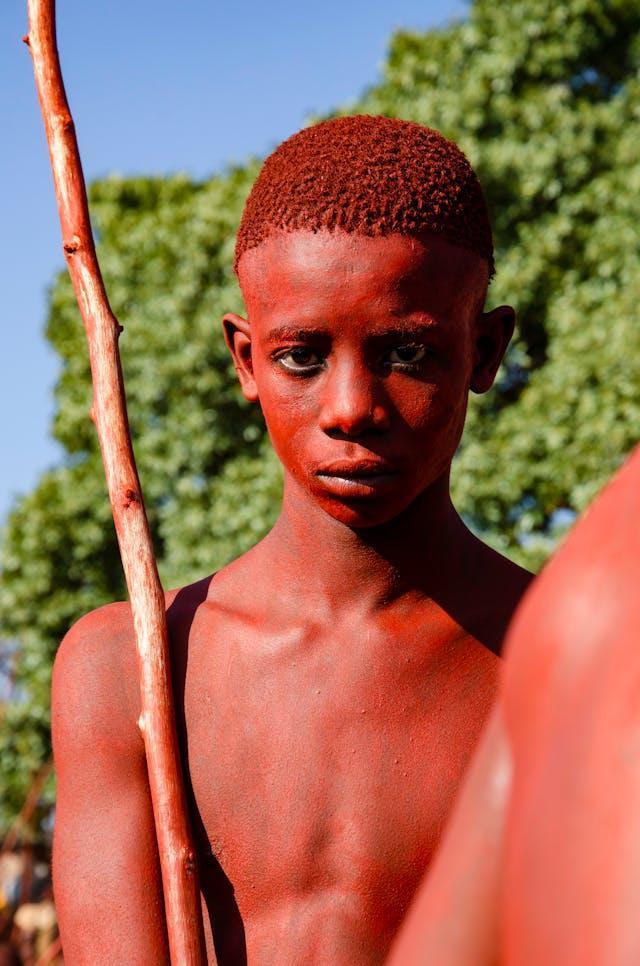
The Maasai are an indigenous Nilotic ethnic group found in Kenya and Tanzania. They treasure red soil, the red ochre, what they refer to as “Olkaria”, gotten from iron-rich red clay-like soil (laterite).
While Oklahoma’s red soil covers a huge part of the land, in Kenya, people dig red ochre in specific locations in the Rift Valley and Central regions.
Maasai community members set out to locations to dig up the red ochre, which they use during key ceremonies to paint their faces, bodies, and hair. They also decorate the Maasai warrior shields using red ochre.
In an article by Kenya News Agency about the unique attire of Maasais, Nariku Ole Simel, an elderly Maasai man, narrates, “The red ochre has deep significance. Those who apply it are regarded as sacred, such that their instructions are respected by both the young and the old.”
To better understand the traditional use of the red soil by the Maasais, I interviewed Maison Ole Nkurrunah. He is a Kenyan poet and playwright who describes himself as a “Maasai historian who invests a lot of time studying the history and culture of the Maasai people, out of passion, to document it for future generations.”
Maison Ole Nkurrunah runs the Maasai Cultural Resource Center, a community-based organization that interviews Maasai elders, captures their knowledge and wisdom, and preserves information for future generations. Some of his works capture stories and the wisdom of the Maasai, for example, his poetry collection ‘I Am Writing An Elegy By The River Siyiapei And Other Poems’ and the play ‘Errant Native’, a historical play that won at the 2024 Kenya International Theatre Festival Playwrighting Competition.
“Hematite is the chemical compound in soil that makes it reddish. The Maasai use red soil to make their ochre. It’s also used by the Himba people of Namibia, who have a lot of similarities with the Maasais,” he told me.
Nkurrunah has written poems about “the people of the red cattle”, referring to the Maasais. He explained that the reference is because the Maasais “have red predominantly in their dressing, and they love cattle that are red.” They also “mix red soil with fat from cattle,” which they then apply to their bodies during ceremonies. “A Maasai lives for three reasons: land (soil), cattle, and people. Therefore, they take the red soil, mix it with fat from cattle, and smear it on their faces and bodies during ceremonies,” Nkurunnah said.
The Maasai people dig red soil from specific locations, like mountains, because they believe mountains are holy grounds or “God’s home.”

“Maasais use two types of ochre, the red and white, both of which are found in the Earth in areas rich in iron oxide,” he explained. “The red ochre is used in almost all ceremonies, like birth, naming, and marriages, to smear on the head, draw patterns on the face, and make markings on parts of the body like the legs.” One ceremony, however, the Eunoto, which “marks the transitioning of warriors from moranhood to eldership,” uses white ochre.
The magical touch of nature
One touch of nature makes the whole world kin.
~William Shakespeare
It’s amazing how, from Oklahoma to Kenya (and other parts of the world), the earth keeps us grounded to our roots and beliefs, and influences our ways of life.
The story of the red dirt in Oklahoma and the red ochre in Kenya, and how soils from both areas are reddish as a result of nature’s processes of oxidation, calls Shakespeare’s words to memory: One touch of nature makes the whole world kin.
Every time I think of or interact with my kin, the Maasai of Kenya, and I see them using the red ochre, I will think of Oklahoma, the Red Dirt State, and my connections there.

Leave a comment
Your email address will not be published. Required fields are marked *